Sample Courses:
  • BIO-201. Food Ecology (cross-listed with ENS-201). Examines environmental issues related to food and food production.
  • BIO-243. Bioinformatics: Information Technology in the Life Sciences (cross-listed with CSC-243). Examines the intersection of biology and information technology; includes collaborative projects between biology and computer science students.
  • BIO-264. Epigenetics, Development, and Diseases. Focuses on the epigenetic phenomena (e.g., RNA interference and genomic imprinting) on development, embryonic stem cells, animal cloning and heritable human diseases.
  • BIO-321. Herpetology: Biology of Amphibians and Reptiles. An introduction to amphibians and reptiles, including structural and functional characteristics, reproductive adaptations and evolutionary relationships.
  • BIO-322. Conservation Biology. A case-study approach where students apply ecological understanding to the management of natural ecosystems; topics include genetics and population biology of rare species, fire ecology and management, landscape ecology and global climate change.
  • BIO-330. Comparative Animal Physiology. A study of internal physiological systems (e.g., respiration, circulation and muscle systems).
  • BIO-332. Comparative Vertebrate Anatomy. Comparative analysis of vertebrate structure with emphasis on evolution and function.
  • BIO-345. The Illustrated Organism (cross-listed with AVA-345). Descriptive graphic and written analysis of plants and animals; direct observation in field, studio and laboratory settings integrating biology and visual arts.
  • BIO-354. Developmental Biology. Principles of embryonic development with emphasis on experimental design.
  • BIO-362. Introduction to Neurobiology (cross-listed with PSY-312) Function of neurons, nervous systems and sense organs, with emphasis on vertebrates.
  • BIO-378. Cancer Cell Biology. Investigates the molecular basis of cancer by comparing normal cells to cancer cells with respect to growth control mechanisms, signal transduction, and cell-cell and cell-environment interactions.
  • BIO-384. Molecular Genetics. An understanding of many of the commonly-used techniques in the “toolkit” of the molecular geneticist; emphasis on recent advances in cellular response to environmental stimuli, tumor formation and human genetic disease.
After Union:
After Union
  • Anesthesiologist, Maimonides Medical Center
  • Marine Habitat Research Specialist, National Marine Fisheries Service
  • Research Assistant, Harvard Institute of Medicine
  • Emergency Medicine Physician, Wayne State University
  • Medical Writer, Yale New Haven Hospital
  • Biocoustician, Alaska Fisheries Science Center
  • Veterinarian, Valley Animal Hospital
  • Resident OB/GYN, Tufts New England Medical Center
  • Professor, Utah State University
  • Assistant District Attorney, Bronx County
  • Oncological Research Scientist, Novartis Institutes for Biomedical Research

Biological Sciences

Studying the Biological Sciences at Union is both exciting and rewarding on a variety of levels, which includes gaining hands-on laboratory experience, making new discoveries through research, and gaining an international perspective in a constantly evolving field.

Compared to colleges of similar size, the range of courses offered at Union is exceptional – cell and molecular biology, neurobiology, bioengineering, plant and animal organismal biology, environmental biology, developmental biology, and ecology and evolutionary biology, to name but a few. Consequently, our students are able to explore their interests and aptitudes in many different areas.

Our Common Curriculum courses range from “Understanding Cancer” to “Food and Health in the 21st Century,” to a field course combining supervised observation and/or service learning experiences in various health care settings with on-campus seminars. Biology is central to four Interdisciplinary Programs: Neuroscience, Environmental Science and Policy, Biochemistry, and Bioengineering.

Union’s equipment and research laboratories are first-rate. Many Biology faculty research labs are housed in the Peter Irving Wold Center, Bioengineering Center or new Center for Neuroscience. Our undergraduates have access to such advanced instruments as a laser confocal microscope, video-microscopy workstations with digital image processing and microinjection capabilities, PCR workstations and much more. A recent NSF Major Research Instrumentation Grant has enabled the College to acquire a continuous flow Delta V Plus isotope ratio mass spectrometer and supplemental components to support interdisciplinary research and undergraduate student research training.

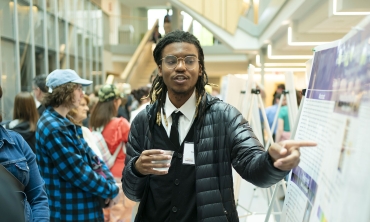
Many students carry out independent research under direct faculty supervision, which leads also to participation in Union’s annual Steinmetz Research Symposium and national scientific meetings, as well as to publication as co-authors in scientific and professional journals. Our accomplished faculty have received research grants from the National Science Foundation, National Institutes of Health, Air Force Office of Scientific Research, Howard Hughes Medical Institute and other prestigious foundations. In addition, Union’s proximity to the Adirondacks, Albany Pine Bush, Mohawk and Hudson rivers, and many natural lakes offers innumerable field research opportunities.

A significant number of Biological Sciences majors opt for a Term Abroad. While they may apply to any term offered through Union’s International Programs, many choose Australia, a program organized in coordination with the Centre for Marine Studies at the University of Queensland, Brisbane. Others study at the National Research Council in Palermo, Sicily, or on a Union program that compares national health systems in Canada, Denmark, England and the U.S.

As a Biological Sciences major, you will find that your classroom, laboratory and close working relationship with our faculty will provide a solid foundation for success in graduate and professional schools and in any number of careers, including medicine, biotechnology, veterinary science, dentistry, research science, environmental conservation and public policy.