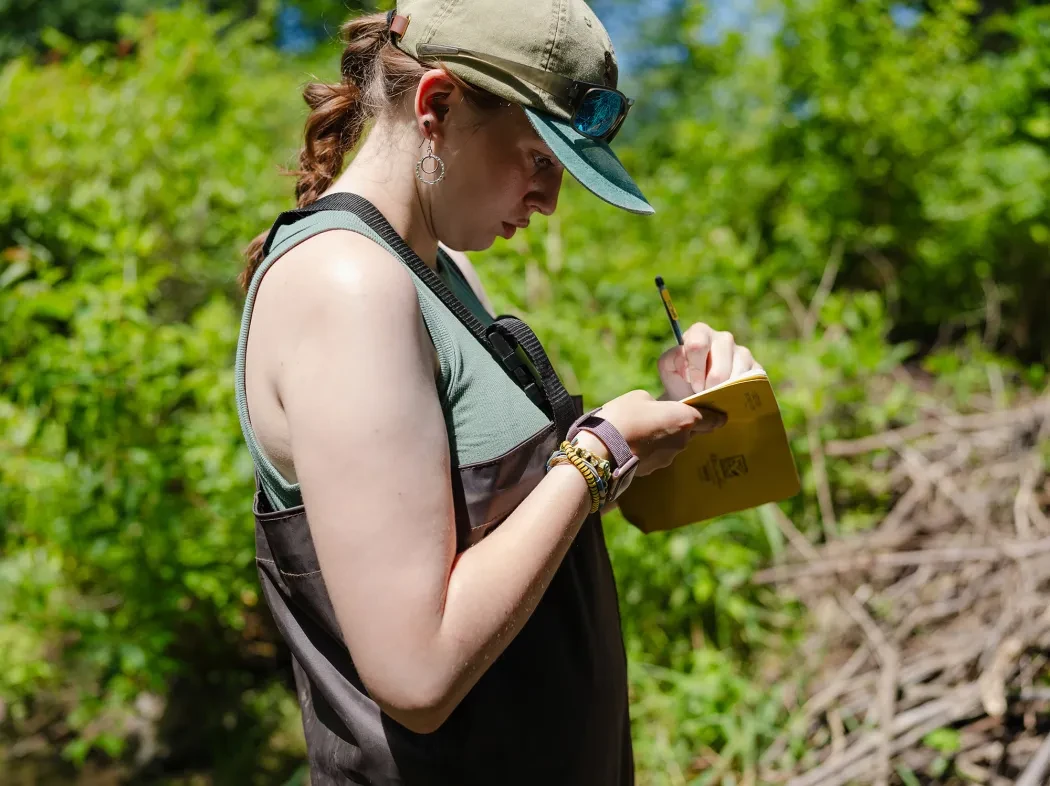
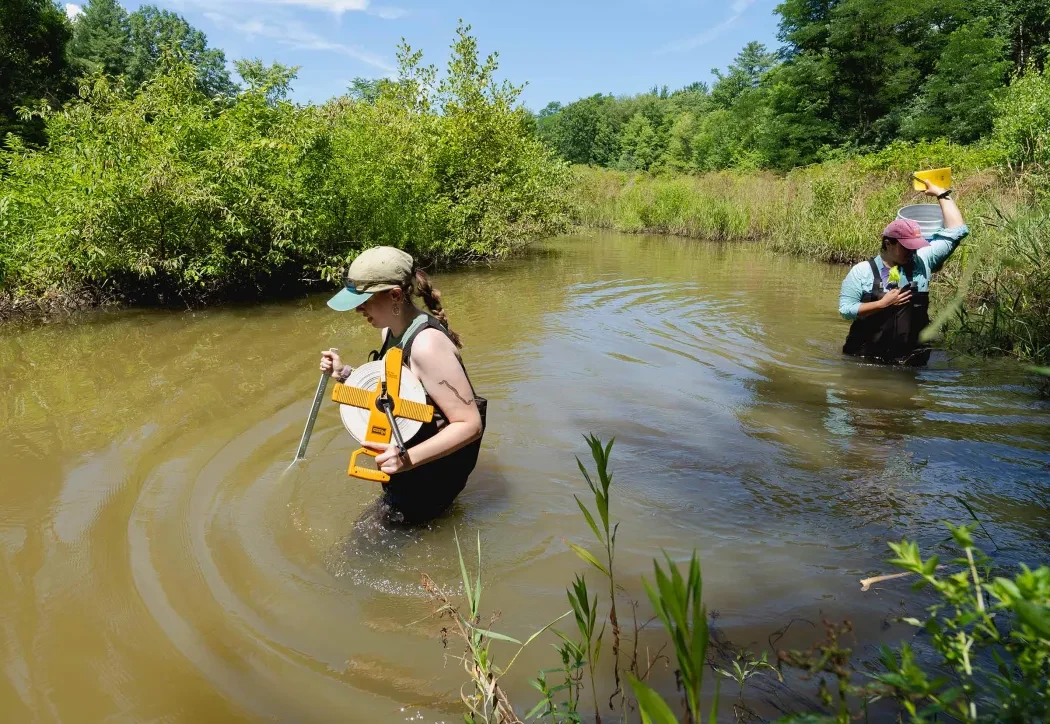
On a hot, muggy morning, Savannah Cote ’27 hikes a short distance into the woods of Indian Meadows Park, an easy drive from campus in Glenville. Standing on the edge of a small stream, she pulls on a pair of waders over her summer clothes.
She is joined by her mentor, Melissa DeSiervo, an assistant professor of biological sciences, who repeats the routine.
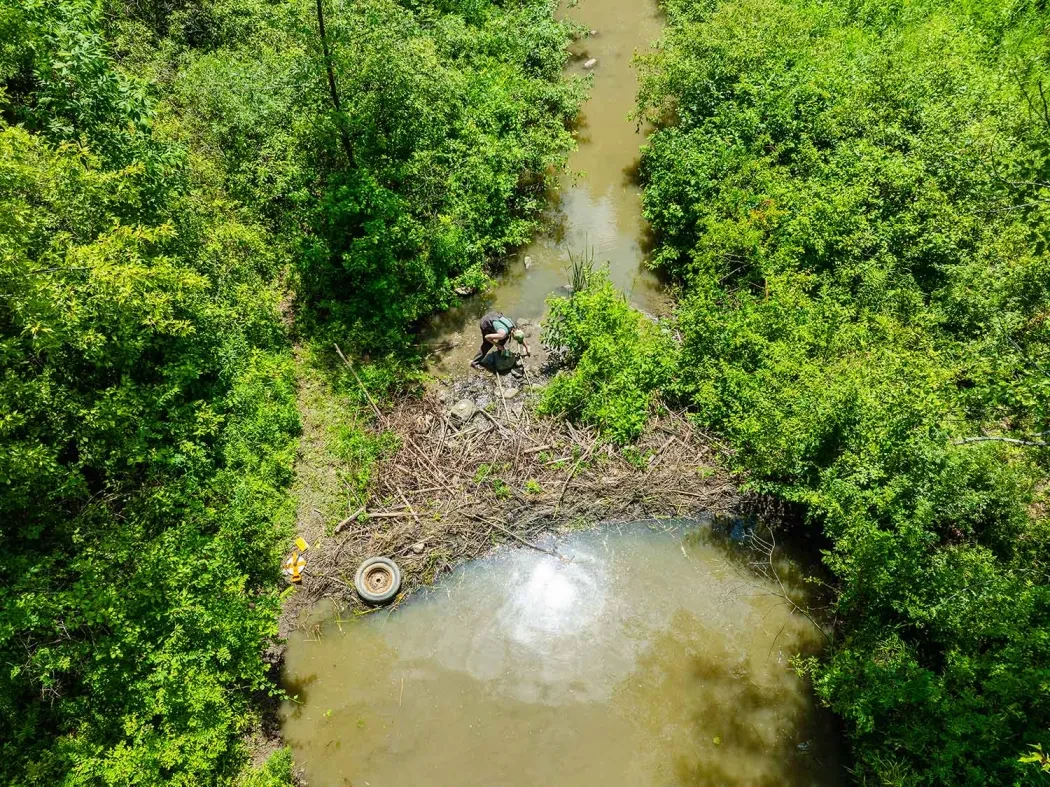
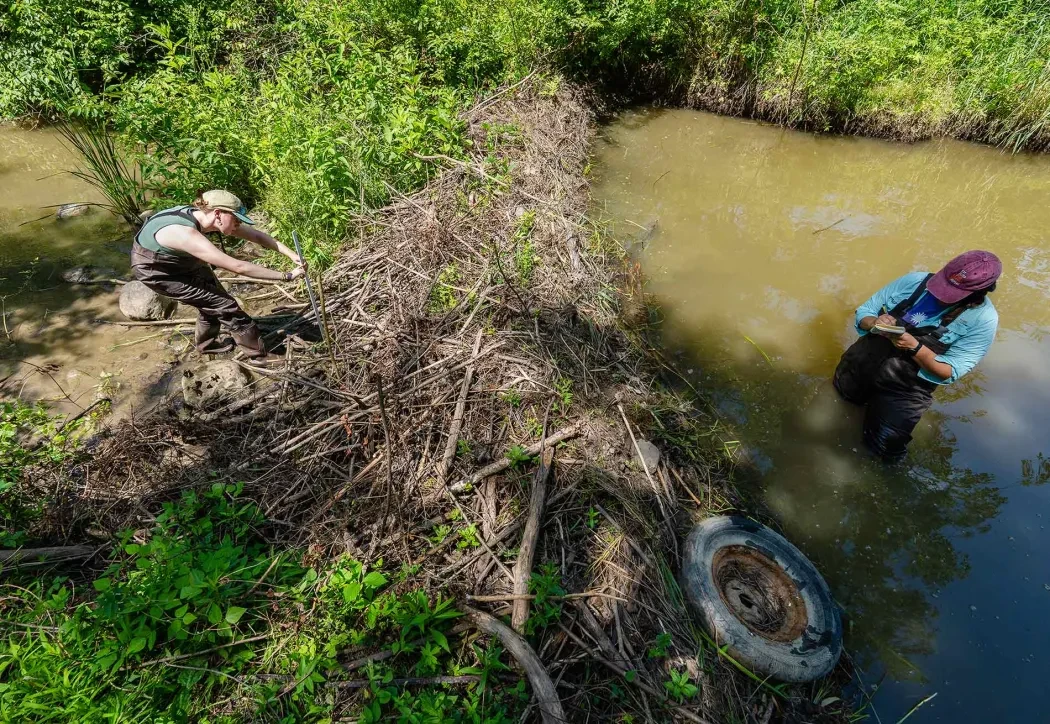
Armed with a white plastic bucket stuffed with a measuring stick and other tools, the student and professor enter the brackish-colored water and slog about 20 yards to their destination: a freshly constructed beaver dam.
Made of sticks, branches, logs and other material, these crude, architectural wonders are a key component of Cote’s summer research. An environmental science major with minors in climate studies and political science, Cote is studying how beavers in the lower Mohawk Watershed are modifying the landscape, specifically in and around stream ecosystems.
“This is an especially important question as beaver populations are only getting bigger in New York and their ranges are expanding because their population has been recovering since trapping/hunting in the 1800s,” said Cote, from North Brookfield, Mass.
“Humans and beavers have had a difficult time coexisting for years, and so it is important that we understand what factors they are modifying in the natural world and how they may be doing so as well. We have been specifically looking at dams to pinpoint a sign of beaver activity and in the past, I have done research that characterizes the upstream versus downstream environments.”
Cote is among more than 155 students across disciplines engaged in paid research this summer. Most projects are funded through the College’s undergraduate research program. The rest are supported by government, foundation or scientific society grants to faculty members and academic departments. The Lee L. Davenport (Class of 1937) Summer Research Fellowship supports 36 projects in engineering, chemistry, biology, physics and geology.
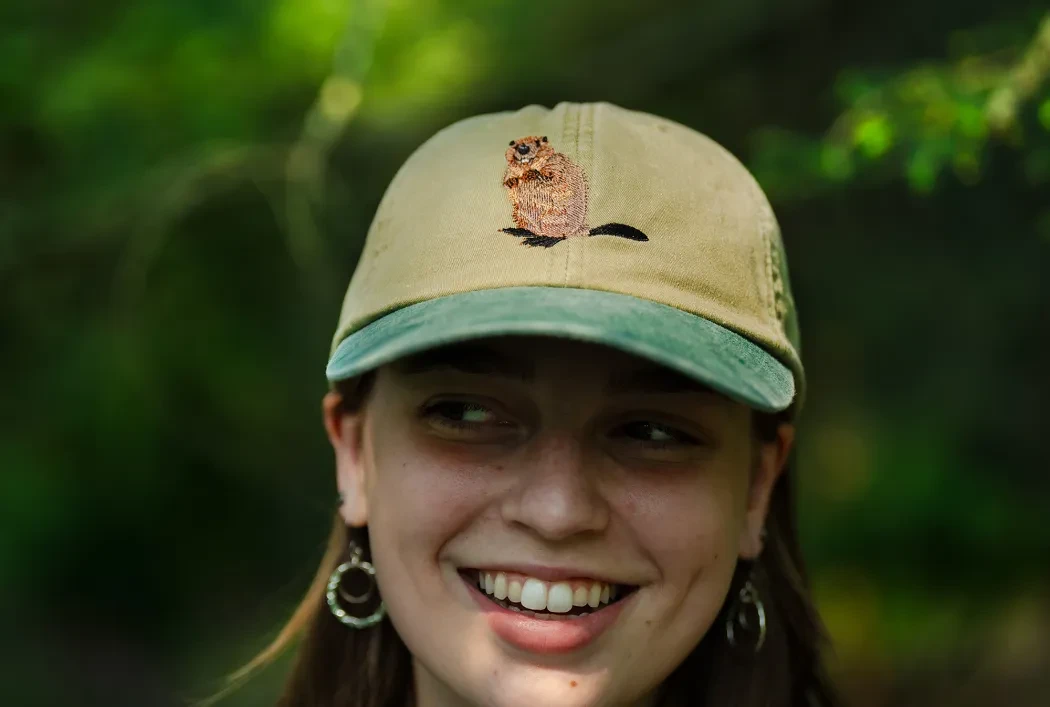
During weekly seminar series, student researchers present their work, learn about innovative research and scholarship conducted by Union faculty, and participate in professional development activities.
A poster session highlighting many of the summer projects will be held Thursday, July 23, from 12:30 to 1:30 p.m. in the Lally Reading Room in Schaffer Library. Members of the Union community are invited to attend.
Faculty-mentored undergraduate research is a staple of Union’s curriculum. The College has been recognized by the Council on Undergraduate Research for excellence in its programs that offer high-quality research experiences for undergraduates.
Since 1986, the College has fostered close working relationships between thousands of students and faculty in the summer as part of its longstanding commitment to undergraduate research.
“It’s rewarding to see all the awesome work our students and faculty get done in a few short summer months,” said Matthew Anderson, director of undergraduate research and associate professor of computer science. “Many students will continue their work into the school year as senior projects and theses, and will show off their final results at the Steinmetz Symposium next May.”
For Maren Kreutzer ’27, summer has provided the opportunity to continue research she began in the spring. An English and environmental studies major, Kreutzer is engaging both disciplines for her project, “Poetry and Prose from the Birdhouse: A Literary Avian Guide to Union College.”
Combining scientific avian observation with inspired poetry and prose, the project will also include hand crafted illustrations of the more than 100 bird species she has observed on campus, including in Jackson’s Garden, the meadow at College Park Hall and Octopus’s Garden, among other places.
“This project combines my passion for the sublimity of nature and love of literature’s ability to capture its magnificence,” said Kreutzer, who is from North Salem, N.Y.
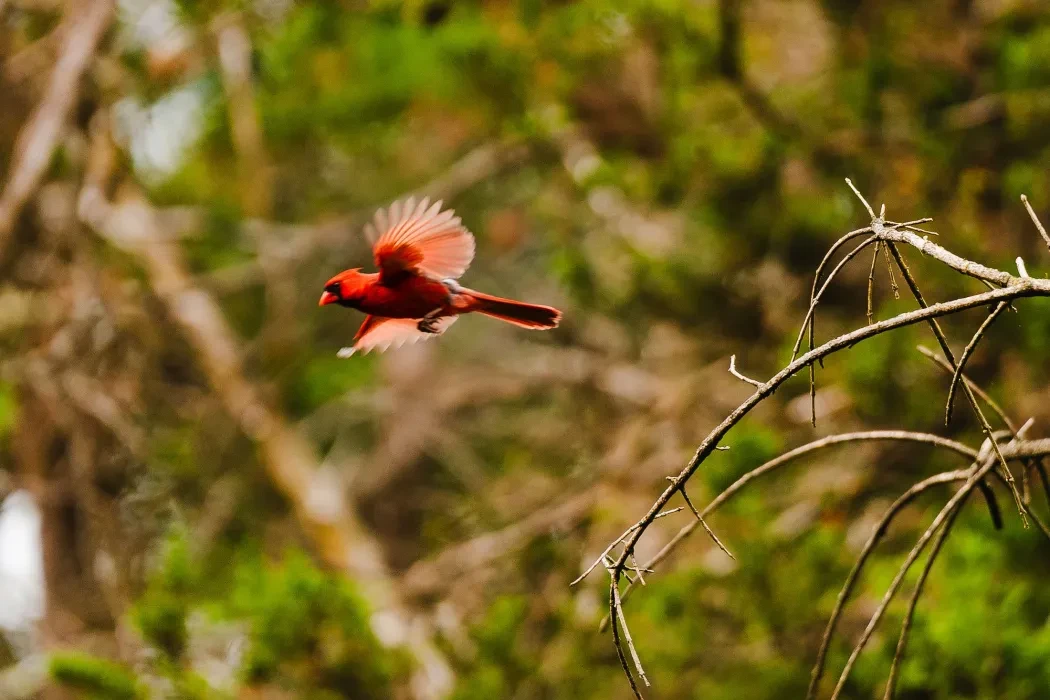
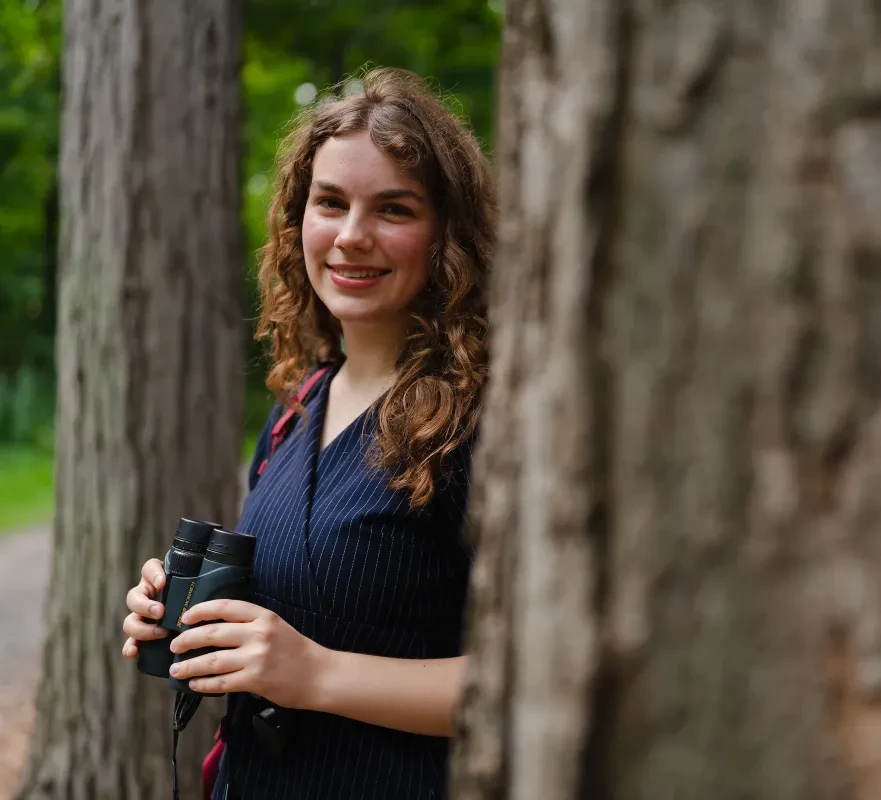
A typical research day for Kreutzer involves writing and reading poetry and bird books, and creating concept sketches for the book’s layout. She also examines each bird species she has documented and her observations to create individual biographies. Each bird will have its own page in the book, accompanied by her illustrations and writings.
“I chose this project because I am a creative person,” she said. Her mentors are Jennifer Bishop, senior lecturer of biological sciences, and Anastasia Pease, senior lecturer in English and Russian.
“I didn’t want to be limited by the bounds of a formal paper—I wanted the freedom to create something impactful and really express my passions. I am especially enamored by nature’s wonder and literature’s ability to translate that to words. I’m also just a big fan of birds.”
While taking a humanities class as a high school senior, Evan Smith ’29 was intrigued by Hammurabi’s Code. The earliest comprehensive law code from ancient Iraq written about 3,500 years ago, its famous principle is “an eye for an eye.”
When he arrived at Union, Smith wanted to learn more about the code. He spends hours in the library seeking information around two questions: What was Hammurabi’s Code, if not a code of law; and how did Hammurabi define justice?
“Most people are led to assume that Hammurabi’s Code defined the law in Old Babylonia, but actually, the code is never cited in any extant court documents from this period or later,” said Smith, a physics and history major from Beverly, Mass.
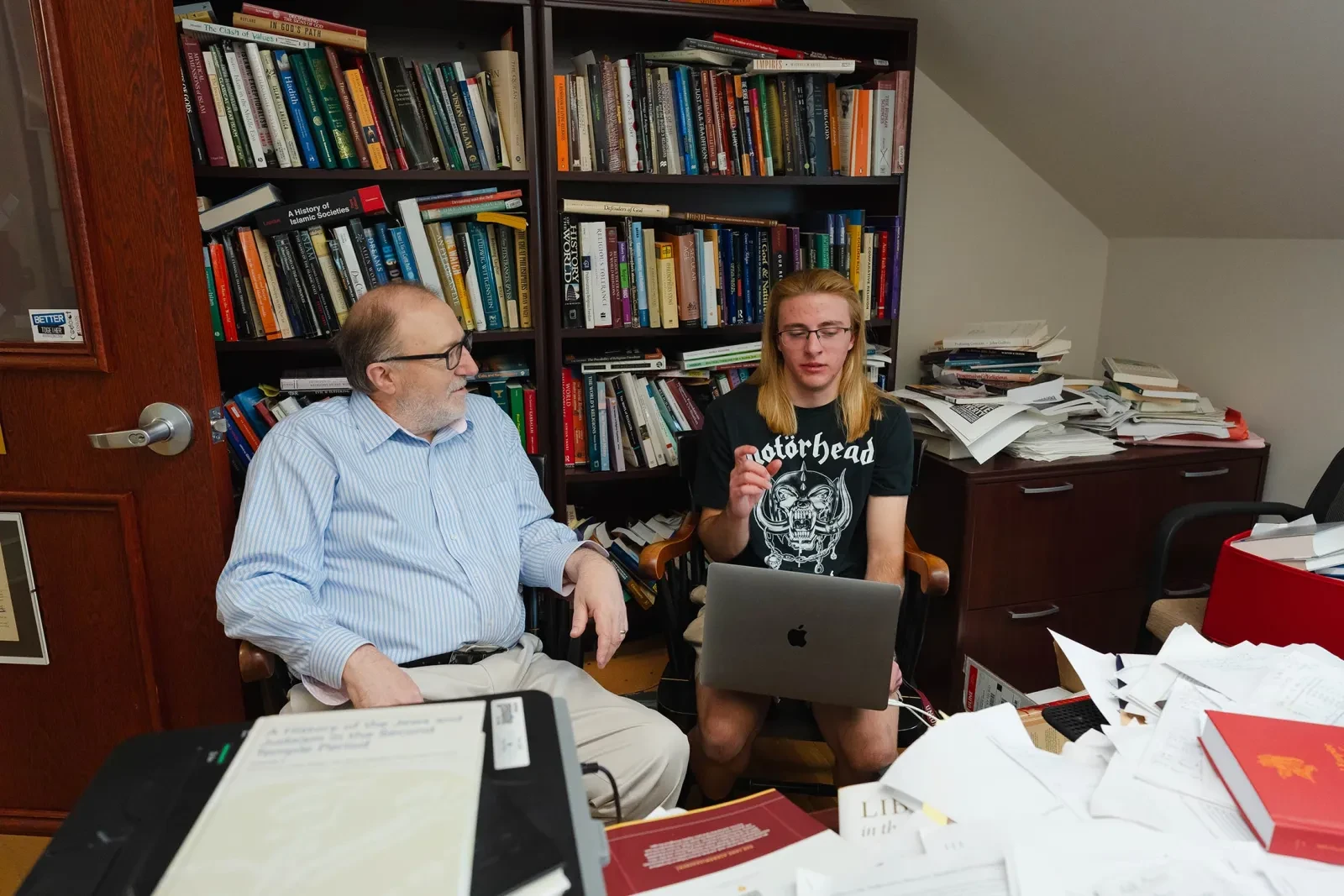
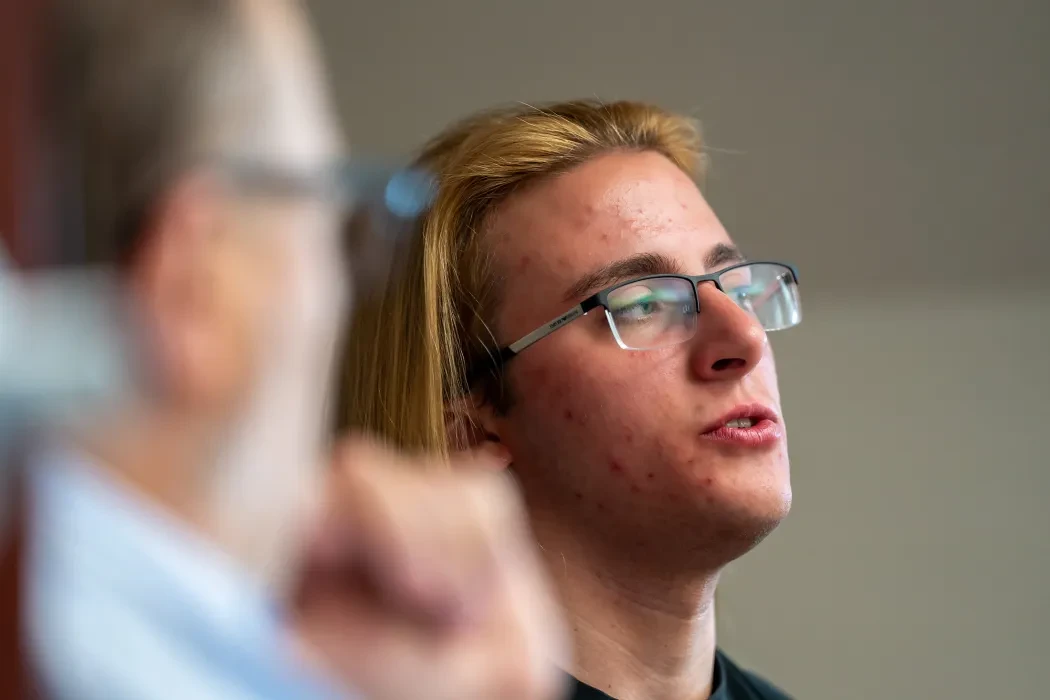
Professor Peter Bedford and Evan Smith '29 discuss Smith's research on Hammurabi's Code in Bedford's office. Smith is exploring how the ancient Babylonian concept of 'an eye for an eye' was shaped by social class.
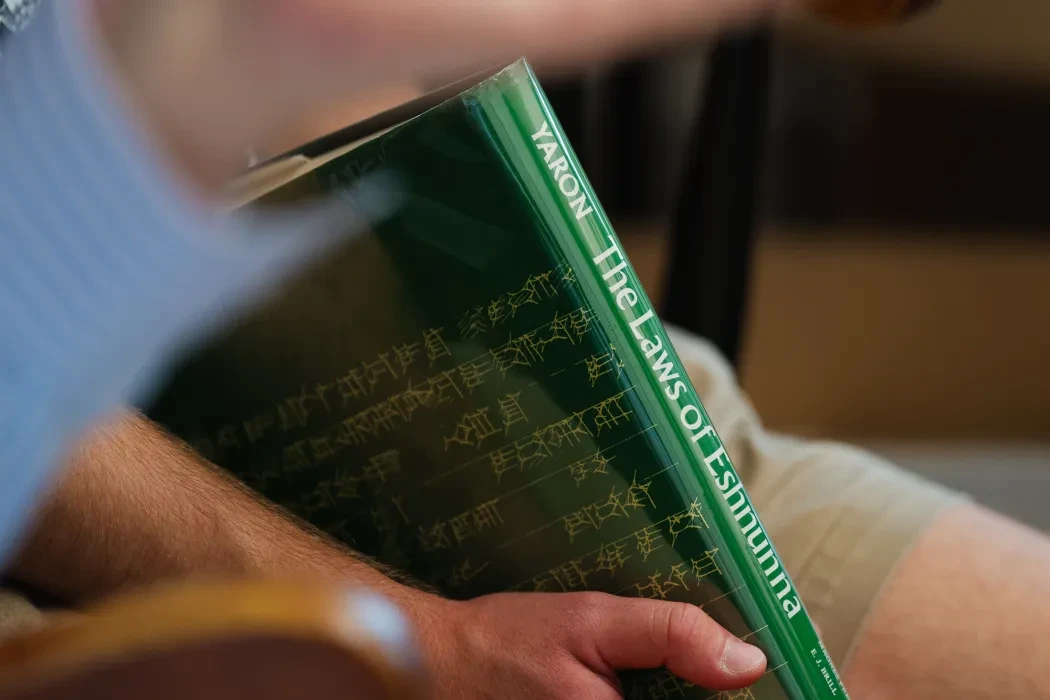
“Hammurabi’s Code was more royal propaganda than it was law. What many do not know is that there were three social classes in Old Babylonia (according to Hammurabi), and “eye for an eye” only applied to an injury done by a person of the highest class to another of equal status.”
He continued, “The first question is important for historical accuracy; the second is important because Babylonian justice was subjective, not universal. Justice was a privilege, not a right, as is unfortunately still the case today in many parts of the world. Why is it that some bodies are valued more than others? Perhaps studying justice gaps in the ancient past may illuminate the failures of our justice systems today.”
Smith is working with Peter Bedford, the John and Jane Wold Professor of Religious Studies. Bedford said he was impressed that as a first-year student, Smith wanted to undertake a summer research project. Most students are interested in research in later years.
Bedford said Smith is able to do this because he did important preparation before arriving at Union and is motivated by the research topic. He has also made very good use of his first-year studies, particularly with the History faculty.
“Notably, while this research topic is based in the humanities, Evan is a physics major,” said Bedford. “This is what Union students are like—not narrowly bound to either STEM or humanities. Evan is taking advantage of the opportunities the College affords him to build breadth in his education and to pursue a range of interests.”
For a list of this year’s summer research projects, visit the website.