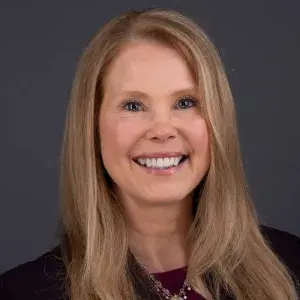
Jillmarie Murphy, the William D. Williams Professor of English and director of Interdisciplinary Studies, recently completed “Women and the Environment in the Long Nineteenth Century 1775-1925.” The four-volume set considers varied interconnections between gender and the environment, broadly conceived, and includes extensive editorial commentary focusing on a variety of rare, unpublished and difficult-to-access archival documents, as well as more familiar published sources.
Published by Routledge, the collection will be available April 30.
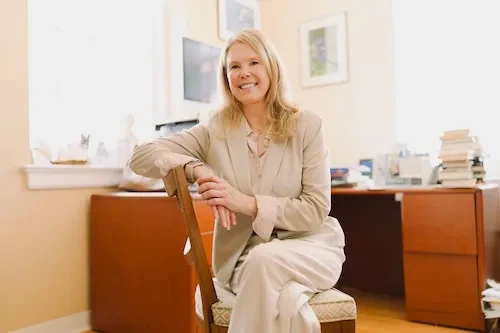
Jillmarie Murphy, the William D. Williams Professor of English and director of Interdisciplinary Studies
This conversation has been edited and condensed for clarity.
How did you become involved in this project?
In her initial email to me, Rachel Douglas, editor of Routledge's Historical Resources series with Taylor and Francis Books, indicated that she approached me because of my “publications and research expertise in the area” of ecofeminism, material culture studies and place attachment.
What was your interest in tackling this ambitious project?
Much of my scholarship depends on archival research and considers issues related to gender, race, class and ethnicity, so this project seemed a natural fit.
You started the project in 2022. What were some of the tasks you had to do to complete your work?
When I first began working on this project, we were still under Covid restrictions, so I was initially unable to travel to research libraries to find unpublished material. Fortunately, some libraries were willing to send me digitized copies of a few pieces of archival material that I requested. Once the archives re-opened, I began to travel to places such as the American Antiquarian Society, Harvard's Schlesinger Library, and Union's own Kelly Adirondack Research Library.
Who is the target audience for this set for?
The collection will be of interest to students and scholars of Women's History and Environmental History.
What can readers learn from this collection?
These four volumes consider foundational questions raised when interrogating and reconfiguring what has long been considered the traditional, Western canon. Nineteenth-century women, especially women of color, indigenous women, queer writers, working-class and poor women, and religious women, were frequently silenced, ignored, and their work diminished or forgotten. Many cultures have an extensive history of perpetuating the “greatness” of the work in which white, heterosexual men are engaged, often at the expense of work done by women. My hope in recovering the voices of unknown, silenced, or forgotten women, is that it will challenge established perceptions of women's accomplishments.
The scope and content of the project was a monumental undertaking. Is there anything you wish you could have done differently?
Since I am a perfectionist, I can confidently state that I've never been 100 percent happy with any of my publications. There is always a sense of “I should have done this or that," or “why did I do this or that,” but, overall, it feels like an enormous accomplishment. This is certainly the most time-consuming scholarly endeavor in which I have ever been engaged, and I hope it will be helpful to students of history.
One thing I am especially pleased by is that I was able to research some areas I had not yet explored in depth, such as neurobiology and neuroaesthetics. I have a background in psychology, but after learning more about these different areas of neuroscience, I made the decision to continue my education at the University of Pennsylvania, where I am currently completing a certificate in neuroscience. The courses I have taken so far have prompted me to develop a new course, “Neuroscience and the Literary Brain,” which I taught during the winter term. I also broadened my research trajectory for my current monograph, which focuses on the neurobiology of human-nonhuman animal attachments in literary naturalism.
I feel incredibly grateful to have had so much support from Union College, and that I was awarded a Humanities Faculty Research Fund grant, which was instrumental in helping me complete my work on this project.
Volume I: Ecologies of War & Rebellion includes writing by and about women living during the American, French and Haitian revolutions, the War of 1812, the Irish Revolution, the Indian Independence Movement, the Anglo-Zulu War, the Boer Wars, Mexico and the American Civil War, and the Great War. This volume highlights the variety of traumas women faced both on the battlefield and whilst living on the edges of conflict throughout the long nineteenth century.
Volume II: Creativity and Entangled Environments highlights the creative ways that women attempted to (dis)entangle themselves from the gendered spaces into which society had emplaced them. Selections include works of fiction and poetry, children’s literature, travel narratives, personal letters and several published works on the topic of spiritualism and mesmerism.
Volume III: Environmental Precarity—Social Justice & Marginalization considers the variety of ways women were pushed to the margins of society. Sources focus on slavery and abolition, poverty and the working-class woman, eco-indigeneity, and nonbinary bodies in indigenous environments. Other sources examine “mannish females,” a term used derisively at the time to describe women who sought more comfortable clothing styles, and transgender headlines, which highlights sensationalized newspaper stories about women who actively chose to dress in men’s clothing, seek employment as men, live their lives as men, and surreptitiously marry other women.
Volume IV: Science, Medicine, and Natural History examines such topics as nineteenth-century female botanists, garden bowers and the entrapped woman, human-animal interactions, anthropocene feminism, biology, geoscience, astronomy and chemistry. Sources consider such topics as the female body as a biologic commodity, feminist geography, feminist panarchy, and female responses to disease and matter.