Caves in the tropical Peruvian Andes hold clues amassed over the past 450,000 years, which suggest a strong possibility for an alarming reduction in rainfall across a third of the globe, according to a new study.
The long-term drought is a troubling issue for the more than 2.7 billion people on Earth who depend on monsoon rains for fresh water.
The research was published this week in Nature, the world’s leading journal of peer-reviewed science research.
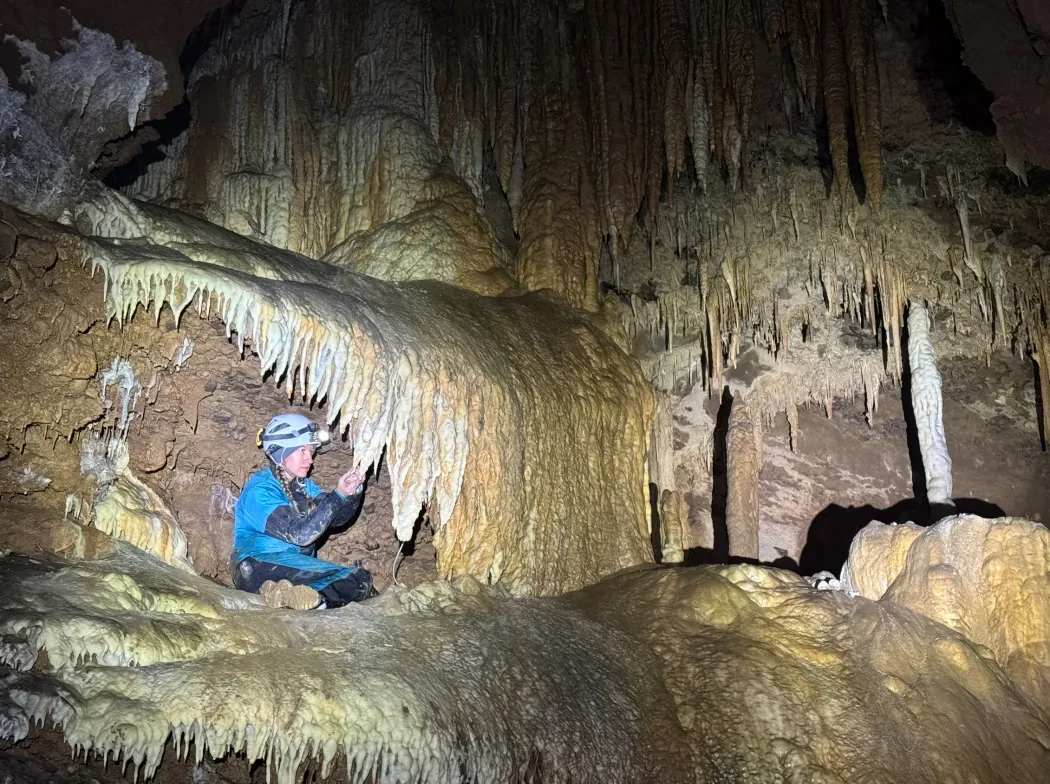
Elizabeth Olson, a former post-doctoral researcher in geosciences at Union, collecting drip waters inside Haugapo cave in the Peruvian Andes. Now a visiting professor of earth and environmental sciences at Wesleyan University, Olson is the lead author of new study that shows caves in the tropical Peruvian Andes hold clues amassed over the past 450,000 years which suggest a strong possibility for an alarming reduction in rainfall across a third of the globe. The research was published this week in Nature, the world’s leading journal of peer-reviewed science research.
“The article is exciting because it provides scientists with a half-million-year rainfall history for most of the South American continent,” said Elizabeth Olson, a former post-doctoral researcher in geosciences at Union and lead author of the study. She is now visiting professor of earth and environmental sciences at Wesleyan University.
“The future of freshwater resources is increasingly uncertain as the human population grows and weather patterns shift in response to the changing climate. This record is very high-resolution, with an average resolution of 50 years. That resolution let us investigate changes between the South American and Asian monsoons at a scale that has never been accessible before.”
Researchers spent six years examining cave stalagmites – mineral formations created by water dripping onto cave floors – to determine monsoon strength. Monsoon rainfall is the primary fresh water source for Earth’s most diverse ecosystems and for much of the Earth’s population.
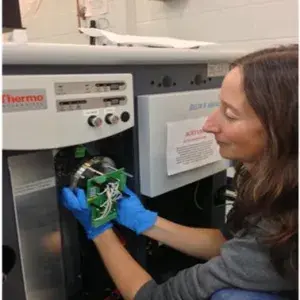
Researchers sampled rainwater, cave drip water, air and rocks to determine the seasonality of stalagmite formation. At Union’s Stable Isotope Laboratory, they analyzed the samples’ isotopic composition to reconstruct monsoon strength over time. They discovered that the global monsoon system has periodically oscillated, strengthening in one hemisphere while weaking in the other. However, during intervals of warmth and warming climate, monsoons in both hemispheres failed for millennia.
These instances of monsoon systems collapsing in both hemispheres during intervals of natural warming are alarming, the study asserts, raising the likelihood of long-term drought.
The Southern and Northern Hemisphere monsoons are normally out of phase with each other but the record shows that there were times in the past when this was not the case,” Olson said. “This means that there is a gap in our understanding of how these important systems work. In the article, we explore what might have caused that behavior. But this work has opened up a research area that will be explored for decades to come.”
Co-authors include David Gillikin, the William D. Williams Professor of Geosciences and chair of the department; Osamu Miyawaki, assistant professor of geosciences; Laura Piccirillo ’20, a Ph.D. student at Duke; Donald Rodbell, the Jane and John Wold Professor of Geosciences; and Anouk Verheyden-Gillikin, senior lecturer in geosciences.
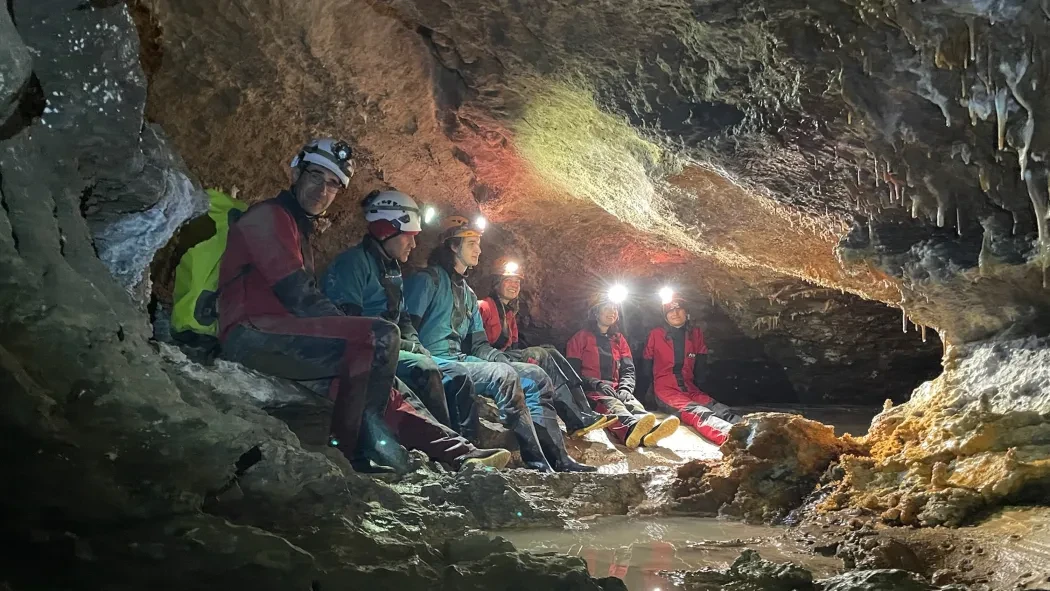
David Gillikin, the William D. Williams Professor of Geosciences and chair of the department, and Donald Rodbell, the Jane and John Wold Professor of Geosciences, with students Patrik O’Brien ’27, Lucy Andersen ’27, Sophia Gomes ’27 and Bess DiNorcia ’28 deep inside Pacupahuain cave in the Peruvian Andes.
In addition, the research was built on the senior thesis projects of 16 Union students over the past six years.
“This is a prime example of how paleoclimatology can shed light on our climate future,” said Rodbell. “Studying how the world has responded to warming episodes in Earth's distant past can inform us about what we might expect in our future. It is especially gratifying that so many of my colleagues in the Geoscience Department collaborated on this work, and that so many students participated through their senior thesis research projects.”
The latest research highlighted in Nature is part of an ongoing project, led by Rodbell and Gillikin, to develop the longest continuous paleoclimate record from the region known as the “heat engine” of Earth. Researchers are collecting lake sediments and cave deposits from the tropical Andes of Central Peru that hold important data about the Earth’s climate history and suggest what the future may hold.
The project is funded by a $1.5 million award from the National Science Foundation. (Union’s share is $541,000). Other collaborating institutions are the University at Albany, University of Massachusetts, University of Michigan, University of Minnesota and University of Pittsburgh.