Department of Economics

SPOTLIGHT ALUMNI INTERVIEWS

Curious what life after an Economics degree actually looks like? We surveyed alumni across industries about their career paths, favorite classes, and advice for current students.

  • Alissa Sangiuolo '21
    Alissa Sangiuolo

    Alissa Sangiuolo '21

    1. In what year did you graduate and what degree(s) did you earn?

    I graduated in 2021. I majored in Economics and minored in Political Science and History.

    2. What is your current position?

    I currently work as an Investor Relations Associate at Cordillera Investment Partners. Prior to my role at Cordillera, I worked at AlphaSights, where I was an Associate and then promoted to Manager. I was recently admitted to NYU Stern's Part-Time MBA program and hopefully plan to begin the program in Spring 2027.

    3. Why did you choose Union? Why did you choose Economics?

    I chose Union College for many reasons, but I think the biggest contributor was the sense of community and how Union structured its classes. Community, human connection, and relationships drive success in many ways and at Union, that started in our classrooms. The intimate class sizes allowed you to be engaged, participate, and get to know your peers but also your Professor. Conversely, the intimate nature of Union's classes allowed my Professors to get to know me. I chose Economics because I wanted to challenge myself, and with a little nudge from one of my favorite professors, Professor Sener, I had the confidence to pursue the major. Studying Economics allowed me to create a strong foundation for myself as a woman in finance.


    4. What was your most valuable experience in economics?

    One of the most valuable parts of my Economics experience was taking some of Union’s more rigorous courses and learning how to struggle through them until I got the result I wanted, which often took extra study sessions and countless office hours. For me, that course was Econometrics. Working through difficult concepts taught me the value of grit and persistence when an answer was not immediately clear. That experience prepared me for the problem-solving required in job interview case studies and continues to serve me in my current role in private equity.

    5. What was your most valuable experience outside of economics?

    Outside of Economics, the most valuable experience I had at Union was volunteering every Friday afternoon at a local soup kitchen in Schenectady through Empty Bowls, where I had the opportunity to give back and connect with the local community.

    6. How did your Union experience help you in your career?

    Union shaped the person I am today. I am a better problem solver, a deeper thinker, and a more thoughtful collaborator because of the courses I took, the people I met, and the professors I turned to for guidance. The rigor and depth of Union’s Economics curriculum taught me to think critically, approach complex problems with confidence, and persevere when the answer was not immediately clear, lessons that have continued to serve me throughout my professional career.

    7. What advice would you give to someone considering a similar career path?

    Networking and consistency are everything. So much of building a career comes down to the people you meet and the effort you put into getting where you want to go. My best advice is to utilize Union’s Career Center and connect with alumni whose backgrounds or careers inspire you, with the goal of learning more and building genuine relationships. Lastly, treat feedback as a gift, whether it comes from an interview, a professor, or a networking call. Listen to it, learn from it, and use it to improve.

  • Emanuel Storch '16
     Emanuel Storch

    Emanuel Storch '16

    1. In what year did you graduate and what degree(s) did you earn?

    2016, B.S. in Economics

    2. What is your current position?

    Founder, CEO of Blackbird Foods

    3. Why did you choose Union? Why did you choose Economics?

    I chose Union after touring the campus as a high school student because I immediately felt the warm and nurturing environment that was missing at a lot of the larger schools I toured. I ended up choosing to study economics because it combines analytical thinking with real-world applications and could be applied to everything from entrepreneurship to consumer behavior. It gave me a broad foundation that ultimately proved very useful as I went on to build and operate businesses of my own.


    4. What was your most valuable experience in economics?

    Studying economics at Union fundamentally changed the way I think about the world. It taught me to look beyond simple explanations and recognize that most situations are shaped by a number of competing variables, incentives, and tradeoffs. Very little is truly black and white, and economics gave me a framework for thinking more critically about why things happen and what ultimately drives outcomes.

    5. What was your most valuable experience outside of economics?

    In addition to majoring in economics, I also minored in German and had the opportunity to take several other language courses. I also spent a term abroad in Germany, which was one of the most memorable experiences of my time at Union. One of the things I valued most about Union was the freedom to explore different disciplines and pursue a wide range of interests throughout my four years there.

    6. How did your Union experience help you in your career?

    I met several amazing people at Union, two of which ultimately introduced me to the cofounders of my company.

    7. What advice would you give to someone considering a similar career path?

    My advice would be to stay curious, take risks, and not feel like you need to have your entire career mapped out from the beginning. Some of the most valuable lessons I’ve learned came from trying things, making mistakes, and being willing to change direction when necessary. If you want to build something of your own, get as close to the work as possible, learn every part of the business, and don’t be afraid to start before you feel completely ready. Persistence and adaptability matter just as much as having a great idea.

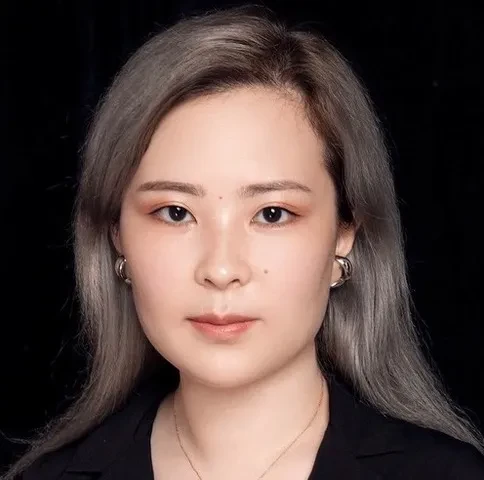
  • Ran Wang '15
    Ran Wang

    Ran Wang '15

    1. In what year did you graduate and what degree(s) did you earn?

    Graduation Year: 2015 Degree: B.S. in Math and Economics

    2. What is your current position?

    I am currently a Senior Monetization Manager at Amazon, where I lead pricing and monetization strategy for Amazon Multi-Channel Fulfillment (MCF). Prior to Amazon, I was a Pricing Manager at Dell, where I led pricing strategy and operations for a $3.8B business. Earlier in my career, I worked in risk analytics at Goldman Sachs and JPMorgan Chase. I hold an MBA from Rice University and an M.S. in Operations Research from Columbia University. I also hold a bachelor’s degree from Union College.

    3. Why did you choose Union? Why did you choose Economics?

    I chose Union for its small class sizes and the opportunity to have engaging discussions and interactions with professors and fellow students. I also really valued the interdisciplinary nature of the college. Union encourages students to explore different subjects and apply what they learn across academic areas, which allowed me to develop a broader way of thinking rather than viewing each subject in isolation. I chose Economics because I believe it is important to understand how the economy works, especially as we navigate the world as adults and professionals. I was particularly interested in both microeconomics and macroeconomics because they gave me different perspectives on how individuals, businesses, markets, and the broader economy interact. I found those questions intellectually engaging and wanted to explore them further. I also liked that studying economics at Union was not limited to the classroom. The department encouraged students to pursue internships and connect with alumni in different industries, which gave me opportunities to see how economic concepts are applied in the real world and learn from people working in the field. That combination of academic learning and hands-on exposure made economics an especially compelling choice for me.


    4. What was your most valuable experience in economics?

    My most valuable experience in economics was learning to think critically about how the economy works and, more importantly, how different parts of the financial system interact. Courses such as microeconomics, macroeconomics, econometrics, and financial economics gave me a strong foundation for understanding those connections and sparked my initial interest in pursuing a career in finance. That interest eventually led me to pricing, where I continue to see how interconnected economic principles, financial markets, businesses, and consumer behavior are. I was also fortunate to learn from many professors at Union who had a lasting impact on me. I still stay connected with several of them today, which is a reflection of how valuable those relationships and experiences were to me.

    5. What was your most valuable experience outside of economics?

    My most valuable experience outside of economics was pursuing a second major in mathematics. It gave me a strong analytical foundation that helped me understand economics more deeply and has continued to shape how I approach problems in my career. I also had the opportunity to participate in the Mathematical Modeling Contest twice. It was an intellectually engaging experience that challenged me to apply mathematical concepts to real-world problems and think creatively about how to approach complex questions. Just as importantly, I built great relationships with my mathematics professors, who taught me a great deal both inside and outside the classroom. Those relationships and experiences remain some of the most valuable parts of my time at Union.

    6. How did your Union experience help you in your career?

    My Union experience has shaped virtually every part of my career. It taught me to think critically, approach problems from different perspectives, and find multiple ways to solve a problem. Just as importantly, Union gave me the confidence to develop and defend my own perspective, make decisions, and be willing to try new things. Those skills have stayed with me throughout my career. Whether I am working on pricing strategy, analyzing a business problem, or making a difficult decision, I find myself drawing on the way Union taught me to think. The experience was much more than what I learned in the classroom; it shaped how I approach problems, work with others, and continue to learn.

    7. What advice would you give to someone considering a similar career path?

    I would give three pieces of advice: 1. Find what motivates you. Test different things and pay attention to what gives you the strongest internal motivation. The average person may spend 30 to 40 years or more in their career after graduation, so it is important to choose a path that genuinely interests you and gives you a sense of passion. You want to enjoy your work just as much as you enjoy the rest of your life. 2. Build skills that travel with you. Focus on developing skills that are valuable across industries and can keep up with the pace of change in today’s economy, especially in the age of AI. Critical thinking, strategic thinking, problem-solving, and the ability to adapt are skills that will continue to matter even as industries, technologies, and specific roles change. 3. Stay curious. Learning does not stop after college. Have a genuine curiosity about the world and make a habit of learning something new every day. The willingness to ask questions, explore new ideas, and keep learning will serve you throughout your career.


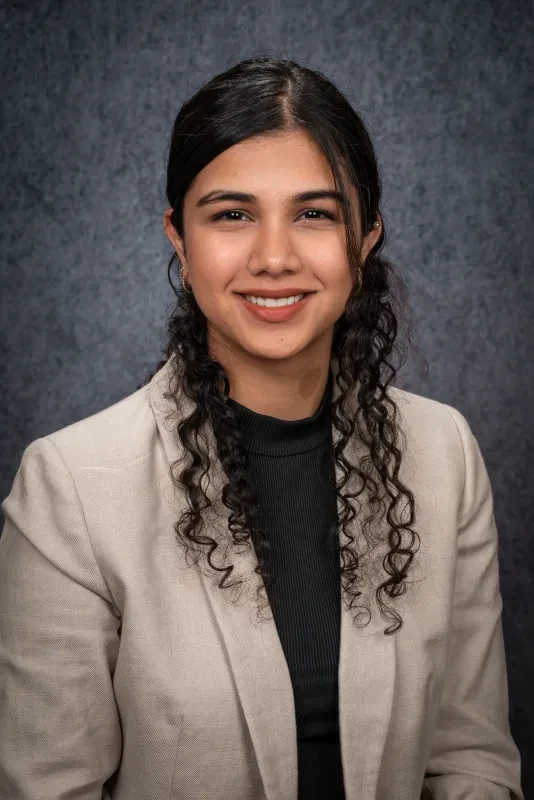
  • Aavasna Ruphaketi '25
    Aavasna Rupakheti

    Aavasna Rupakheti '25


    1. In what year did you graduate and what degree(s) did you earn?

    2025, Computer Science and Economics

    2. What is your current position?

    I am currently an Analyst at Cornerstone Research, an economic consulting firm. In this role, I apply economic theory, quantitative analysis, and data modeling to litigation and business consulting matters.

    3. Why did you choose Union? Why did you choose Economics?

    I chose Union for its liberal arts environment, close-knit community, and opportunities to explore different academic interests. I initially came to Union as a Computer Science major, but my economics courses sparked an interest in understanding how markets work and how data and economic theory can be used to answer real-world questions. I ultimately found that Economics complemented my technical background and allowed me to combine both interests.

    4. What was your most valuable experience in economics?

    My most valuable experience was conducting independent research for my senior thesis under Professor Prateek Arora, who also taught one of my favorite courses at Union, Monetary Economics. I also had the opportunity to conduct research under Professor Sener. More broadly, one of the things I valued most about Union's Economics program was the ability to take the economic theories and concepts learned in class and apply them to topics I was genuinely interested in. Through coursework, seminars, and independent research, I was able to explore different areas of economics, develop my analytical skills, and pursue questions beyond the classroom.

    5. What was your most valuable experience outside of economics?

    My most valuable experiences outside of economics included studying abroad, participating in different dance clubs, and taking on leadership roles in campus organizations. Through dance, I had the opportunity to perform for audiences multiple times, which helped me build confidence, discipline, and teamwork skills. Leading clubs also strengthened my leadership and collaboration abilities. Studying abroad broadened my perspective and allowed me to experience different cultures. All of these experiences helped me develop interests and skills beyond academics that I consider equally important to my personal and professional growth.

    6. How did your Union experience help you in your career?

    Union gave me a strong foundation in both technical and analytical thinking. My coursework and research experiences helped me develop skills in quantitative analysis, data interpretation, and independent problem-solving that I use daily at Cornerstone Research. Beyond academics, balancing research, extracurriculars, and leadership responsibilities prepared me for the collaborative and fast-paced nature of consulting.

    7. What advice would you give to someone considering a similar career path?

    Explore different fields early and don't be afraid to pursue interests outside your primary major. Build strong quantitative and research skills, take advantage of research opportunities at Union, and start networking with professionals in industries that interest you. Many firms offer early outreach programs, so keep an eye out for those opportunities. Most importantly, develop your ability to communicate your findings clearly, both in writing and verbally, and learn to use tools like AI critically rather than relying on them blindly.