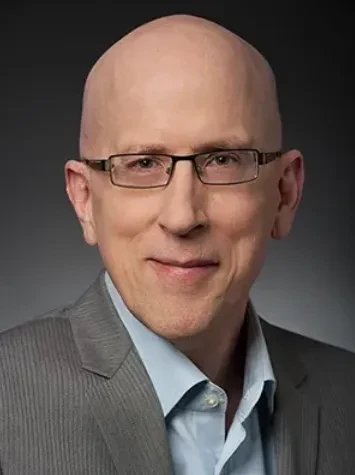
The department is proud to feature accomplished alumni who have entered a variety of fields across academia, the private sector, and the public sector.
Alumni
Read about the experiences of some Union Economics alumni.
For this alum, Union made everything possible ~ Curtis Butler ’90
-
It all started at Union for Curtis Butler ’90.
His time in Schenectady launched his finance career, solidified his dedication to mentoring and inspired his recent jump into entrepreneurship with his new company, Guided Ascent Career Coaching.
“My first conversation with my advisor, Professor Phaup -- who was also my first economics professor -- convinced me that my experience at Union was going to be eye-opening and a chance to prepare for the world,” said Butler, who majored in economics and modern languages, specifically German.
And it was. A scholarship to spend his entire junior year in Germany studying economics, for instance, was nothing short of transformative.
“Professors Kellenter and Ward offered encouragement and support that allowed this life-changing experience to happen,” Butler said. “My time in Germany opened the door for frequent trips all over Europe during my career. I can honestly say that my path as a Union student set everything in motion – including a year of graduate school in Europe and a three-decade-long career in finance.”
Butler began his career as an analyst at the Federal Reserve Bank of New York, moving quickly to Wall Street, where he developed skills in research, portfolio management and client portfolio management. He has been an investor and client-facing executive at industry-leading firms including J.P. Morgan, Jennison Associates and an affiliate of Legg Mason.
As Butler grew his career, he became more and more interested in mentoring his younger colleagues and those just looking for their first jobs – like Union students.
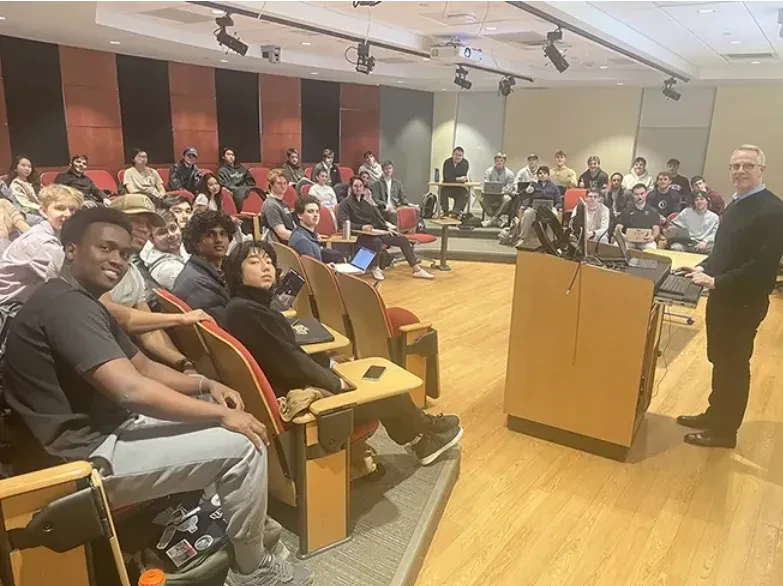
He started getting involved with serious career coaching at Union just before COVID struck and made his first on-campus presentation in late 2019. Since then, he has mentored dozens of students, helping them successfully transition from campus to the office.
“It was incredibly rewarding speaking with students about career development and establishing a steady stream of connections to help them identify the right path and launch their careers,” Butler said. “I will never forget that first event. It was a sit-down dinner in Old Chapel, complete with white tablecloths and nearly 100 students – all courtesy of the Career Center and Peter Fowler.
“It was an electric experience that was the spark that eventually led me to move beyond my finance career and focus full time on helping college students and young professionals find success in their job searches.”
In 2024, Butler founded Guided Ascent Career Coaching. He’s leveraging his 30 years of experience building and leading teams – and the hundreds of times he’s been on both sides of the interview table with these teams – to help people realize their professional dreams.
Our accomplished alumni
As champions of change and catalysts for progress, Union alumni transform ideas into action.
The core of Guided Ascent is one-on-one coaching for students and recent graduates to help them:
- identify their ideal career path and find roles that can set them on that path
- create applications that stand out (through a stronger candidate profile that includes resume, cover letter and compelling personal narrative)
- develop efficient networking strategies that yield stronger connections and better results
- master the interview process
“I have always enjoyed helping others and I am excited to continue giving back to my alma mater and help Union grads – and many others – launch their careers with optimism and early success.”
Communicating during COVID ~ Heidi Arthur ’85
-
Ever wondered who to thank for all that useful COVID info in your newsfeed, on Facebook or even on the community bulletin board? There’s a good chance it’s the Ad Council, and by extension, Heidi Arthur ’85.
For the last 80 years, this nonprofit organization built for communicating largescale, pressing issues, has had a hand in things like changing societal norms around seatbelts or buzzed driving.
Since 2020, it’s been heavily focused on the COVID-19 pandemic, disseminating information through a vast network of partners in media, marketing and advertising.
“The Ad Council has had great success with our COVID-19 vaccine education initiative called ‘It’s Up to You,’” said Arthur, chief campaign development officer at the Ad Council. “Over the course of one year, we helped reduce national vaccine hesitancy from 50 percent to 5 percent by building confidence across various communities.”
Its ability to achieve such results is predicated on its very purpose.
“We are basically built for a moment like this. We have tremendous convening power and throughout the pandemic, we brought together leading public health experts, media, major brands, social platforms, tech and talent to get behind research-based messages that would inspire action,” Arthur said. “Our goal was to ensure that the American public had the most accurate information possible to help them feel empowered to make an informed decision about vaccines.”
“Our campaign, ‘It’s Up to You,’ was customized for each priority audience,” she continued. “We developed over 800 pieces of content and collaborated with wide-ranging partners, including CVS, Meta, Google/YouTube, all major sports leagues, MTV, Verizon, MasterCard, churches, community-based organizations and many more.”
Still, it hasn’t been easy.
Communicating a complex issue, especially one we’re all learning about in real time as scientific understanding evolves (sometimes weekly), presents big challenges.
To keep pace with rapidly changing information and guidance, Arthur and her team did a couple of things.
“We worked in concert with leading public health officials to ensure that our messages reflected the latest, most accurate information,” she explained. “We relied heavily on social listening, often responding in real time through digital and social channels to communicate new essential information and combat misinformation.”
And then once people had the most current information, there was another hurdle to jump. Readers had to believe in the accuracy of the message.
I loved my Union years! I was able to devote my major to my primary passion at the time and discover new areas of interest."
“Distrust is one of the main drivers of hesitancy, therefore, who delivered the message was almost more important than the message itself,” Arthur said. “We worked hard to identify trusted voices that varied by audience, and it was critical to take a very nuanced and targeted approach. Messengers that resonated with key audiences included doctors, nurses, pharmacists, national medical experts, as well as faith and community leaders.”
“We relied heavily on medical professionals to deliver fact-based messages about vaccines and brought in influencers and celebrities as ‘amplifiers,’” she continued. “They brought tremendous scale to our campaign and were also highly influential when it came to sharing their own personal stories.”
Listening was also paramount when it came to building trust with the public.
“People were often confused and bombarded with conflicting messages. It was important for us to lead with empathy and communicate with authenticity and transparency,” Arthur said. “We consistently reassured people that it’s understandable and okay to have questions – it’s normal!”
“Through our own research, we understood the top questions that were on people’s minds. Based on this learning, we made sure our campaign directly addressed questions with timely, accurate and expert-vetted information.”
Arthur, who majored in modern language and minored in economics at Union, credits the College with sparking her interest in her field.
“I loved my Union years! I was able to devote my major to my primary passion at the time and discover new areas of interest,” she said. “I can attribute my initial introduction to the ad industry to my time as advertising editor for Concordiensis (although I did dress up as a Fig Newton and sing the jingle in my fourth grade talent show).”
“Also, Professor Bruce Reynolds – my economics professor and advisor – was wonderful and encouraged me to write my senior thesis on the effects of advertising on the fast food industry. It entailed a massive regression analysis, which was reliant on the use of the only computer in the library at the time (if my memory has this right!). Oh, have times changed!”
From the Mohawk River to Kallang River ~ Pamela Kustas '90
-
Pamela Kustas '90
MAJOR: Economics
CURRENT POSITION: American Dragons Singapore paddle team member
December 2012, Pamela Kustas ’90 joined Bloomberg’s market specialist team as a local hire in Singapore. She had never been to Singapore, knew no one there and would be relocating from Boston, Mass., on her own. To learn about her new home, she did some research.
That included Googling “Americans in Singapore.” Which led her to American Dragons, a paddle club that trains and competes in dragon boat and outrigger canoe races in Singapore and around the world.
A lifelong athlete—competitive runner, triathlete, skier and former Union crew member — Kustas was curious.
“My good friends, Eric ’92 and Alison (Pallotta) Czech ’91, lived in Singapore from 2004 to 2008 with their kids. They were very encouraging about my move and told me I’d probably really like dragon boat paddling,” Kustas said. “It’s a big community there.”
Community is just what she was looking for. When she isn’t working her full-time job as a Southeast Asia equity market specialist with Bloomberg, she trains with American Dragons.
“It’s amazing. There is an entire paddle community in Singapore of people from all over the world. American Dragons has members from over 22 countries— Singapore, China, India, Mexico, Hungary, Ukraine, just to name a few,” Kustas said. “Moving to Singapore without knowing anyone, they became my family. I love being part of team sport.”
And dragon boat racing is a unique team sport.
“With its beginnings centuries ago in Southern China for naval military use, dragon boating today is the fastest growing international team water sport,” Kustas said. “Each year, festivals are held around the world in Asia, Australia, Europe, Canada and the United States—even in East Glenville (N.Y.) on the Mohawk River.”
Outside of Singapore, she has competed in Australia, China, Hong Kong, Malaysia and the Philippines as both a team drummer and a paddler. She has a box full of medals and her team won the 2016 National Championship in Singapore.
“There are 18-20 paddlers per standard dragon boat, plus a drummer and a helm (or steerer),” she explained. “Just like crew at Union, it takes serious commitment from everyone to practice and race together. Typical race distances are 200, 250 or 500 meters. There are longer courses, but to get a general idea, the 500-meter race usually takes about 2.5 minutes.” Whatever the distance, Kustas remains committed.
“At Union, some days we were rowing in the cold rain and strong winds on the Mohawk. In Singapore, we are paddling in ‘equator hot’ temperatures and occasional monsoon rains,” she said. “Knowing your teammates are in it with you, you power through.”
“The crew team was like a family at Union,” she added. “Taking political science and spending a term in Germany were important, too. It was so valuable to live and study abroad. It helped prepare me for life in Singapore and made it easier to adapt to the many different cultures here.”
Seizing opportunity and giving back ~ Xi Gao '15
-
MAJOR: Economics, Asian Studies
CURRENT POSITION: Princeton in Asia FellowXi Gao’s parents didn’t speak English when they emigrated to the United States. But they left China, and worked 12-hour days in restaurants, to give their daughter chances they never had.
The chance to go to college, to have a corporate career, to be whatever she chose.
And right now, after a successful few years at PwC in Boston, she’s choosing to be a Princeton in Asia Fellow.
Founded in 1898, PiA is nonprofit organization independently affiliated with Princeton University. It strives to foster mutual appreciation and cultural understanding between communities in the East and West by connecting service-minded individuals and partner organizations in Asia.
Gao will spend the next year in Shanghai, China, with tech start-up IoT One, where she’ll specialize in accelerating the industrial use of Internet of Things technologies.
“The Internet of Things gives us great technology like smart refrigerators, self-driving cars and fitness watches,” said Gao, who worked in information technology at PwC. “As a researcher and consultant, I’ll help build partnerships between IoT and manufacturing companies, and help companies understand and implement Internet of Things technologies.”
She’s also hoping to build connections of a more familial kind—her parents are from Fujian, just a few hours from Shanghai. Gao is excited about learning where they come from. This will be her first time in China alone, she said, and her first opportunity to fully immerse herself in her heritage and more deeply understand her family’s roots.
Gao’s also looking forward to using her language skills (she’s fluent in Mandarin) to become part of the local community in Shanghai and contribute to it in some way. Turning her own opportunities into something beneficial for others is a habit of Gao’s.
“Coming from a low-income background, I have been very fortunate to be part of organizations that have helped develop who I am today. The main two are Summer Search and Posse Foundation,” Gao said. “Posse empowers students to reach their full potential with mentorship and an incredible support network, and provides full-tuition college scholarships.”
“Thanks to the partnership between Posse and Union, I was able to attend Union and build lasting relationships with professors and other students that have changed my life.”
To express her gratitude and pay it forward, Gao helps organize annual dinners for these entities, supports their fundraising efforts and works to build corporate awareness of their missions. She’s also been involved in organizing groups of professionals, who volunteer with and teach high school students networking skills.
“Every step of the way toward my education and career, I had the support of great organizations,” Gao said. “I want to be there to create equity for low-income students to have the same opportunities as others. Their abilities should not be limited by their financial backgrounds.”
A digital trailblazer ~ Jason Seiken '80
-
MAJOR: Economics
CURRENT POSITION: CEO, QCatalystJason Seiken '80 has built his career on bringing companies into the digital age and catapulting them to the top of their industries. He was also the first Yankee to run a British newsroom, but more on that shortly.
Between 1994 and 1997, Seiken led the transformation of one of American’s flagship newspapers. Building The Washington Post’s digital journalism team from scratch, in 1996 he facilitated the launch of washingtonpost.com, of which he was editor-in-chief.
From there he headed to AOL (1997-2001) and AOL Europe (2001-2006) before landing at PBS. Here, he spearheaded a broad-based digital makeover that included all parts of the organization – from digital revenue, content and marketing to the underlying company culture.
“PBS is a national treasure, but the average age of the audience that supported PBS financially was over 70,” said Seiken, who majored in political science. “In order to survive, PBS needed to grow its digital audience and expand its appeal to younger people.”
So Seiken and his team built the company new products, like a video platform that enabled its stations to increase digital video views from 2 million each month to a quarter-billion each month. They also established PBS Digital Studios, which now has more than 8 million subscribers on YouTube – and 80 percent of them are millennials.
Under Seiken’s leadership, PBS.org surpassed NBC.com, CBS.com and ABC.com in traffic, and in 2013 won more Webby Awards than any company but Google.
Seiken left PBS in 2013 for London, where he became editor-in-chief of the Daily and Sunday Telegraph. Here, the first American to head a Fleet Street newsroom orchestrated the development of the Telegraph’s first strategic plan, which restructured the company for the digital age and devised new tactics for generating revenue.
One such tactic, Seiken said, is growing non-advertising revenue by 90 percent year-on-year.
Its success he’s carrying over to his latest venture, a company called QCatalyst, which he launched in 2016. With offices in London, Washington, D.C., and Romania, it helps companies accelerate their digital growth (through everything from website development to custom-built apps) and develop and execute innovative digital strategies.
“This year we helped an NPR station in Alabama use digital to grow revenue by one-third,” said Seiken, whose father, Arnold Seiken, was a longtime Union math professor. “That translates to more reporters on the ground covering the community – a real life impact for the people of Birmingham.”
“Next year, we’re on track to work with two dozen clients,” he added. “With QCatalyst, I can have a much bigger impact that I would have had working at any one company.”
A life of law and flight ~ Justin Green '84
-
MAJOR: Economics
CURRENT POSITION: Attorney, Kreindler & Kreindler (N.Y.)Justin Green ’84 grew up in Mt. Kisco, N.Y. His mother was a school teacher, until Green’s older sister was born and then she worked at home. His father, who was a doctor, died on Green’s 16th birthday.
The unexpected loss took a toll, emotionally and financially. “We sold our house, moved into a small apartment and my mother went back to work,” Green said.
Now a successful attorney with leading aviation law firm Kreindler & Kreindler (N.Y.), Green represents families in major airplane disasters. His own experience with tragedy has given him an intimate understanding of what his clients are going through.
“Losing my father suddenly at 16 made me appreciate that life goes on after a loss,” he said. “The financial compensation that I obtain for my clients means that maybe they won’t need to move out of their home, that tuitions will be paid and that the life the decedent wanted for her or his family will happen.”
Green’s major cases include the terrorist attacks on Sept. 11, 2001; the Turkish Airlines Flight 1951 disaster near Amsterdam, Netherlands; and the Hudson River midair collision near Hoboken, N.J.
But his most challenging was the disappearance of Malaysia Airlines Flight 370 in March 2014.
“The key evidence in aviation cases is the airplane wreckage. This includes cockpit voice and digital flight data recorders, commonly called ‘black boxes,’ even though they’re bright orange,” Green said. “Until the main wreckage is found and the black boxes are recovered, the disappearance of the flight and the 239 souls on board will remain the greatest aviation mystery in history.”
Also a CNN aviation analyst and military pilot, Green’s unique career path began at a Union College job fair, where the economics major struck up a conversation with a Marine Corps recruiter. Green later was commissioned a Second Lieutenant in Jackson Gardens during graduation weekend in June 1984.
From 1990-91, Green was as an attack helicopter pilot in Operations Desert Shield and Storm. While serving in the Marines, he was in two accidents: a crash landing of a commercial passenger jet and a fiery helicopter crash. This sparked his interest in aviation safety and Green later graduated from the Aviation Safety Officer’s program at the Naval Postgraduate School, and served as his squadron’s aviation safety officer.
He then graduated from Fordham Law School and for the past 20 years has devoted his professional life to advocating for aviation disaster victims.
“I have been fortunate in my career as an aviation lawyer,” Green said. “My time as a Marine Corps pilot and aviation safety officer provided technical training and experience that I use every day as a lawyer.”
“The plaintiff, in most cases, bears the burden of proving why an airplane or helicopter crashed and who is responsible in order to win the case,” he continued. “I do a pre-litigation investigation, which includes examining the airplane’s wreckage and its black boxes.
“I take defense witness testimony under oath. I use many different experts—accident recreation experts, pilot experts, metallurgists or material scientists, and engine and airframe experts. A case may take two or more years to go through discovery and go to trial depending on its complexity.”
It is work he’s proud of.
“In almost all my cases, families have lost loved ones,” Green said. “They want answers about what caused the crashes and want to make sure that no other families suffer the same fate. They deserve justice and I’m honored when these families trust me to represent their causes.”
- Home
- Courses & Requirements
- Advising FAQs
- Faculty & Staff
- Faculty Research
- Research Seminars
- Undergraduate Research and Research Grants
- Economics Student Clubs
- Economics Support Center / Tutoring
- News
- Economics Newsletters
- Economics Alumni Profiles
- Campus Resources and Opportunities for Economics Students
- Preparing for Graduate and Professional Programs after the Economics Major
- Economics Internship
- Alumni
Lippman Hall 221
View in Google Maps